Forrester Predicts Major Change To Website Layouts Due To Conversational Search
Conversational search will transform websites, combining traditional search and chat, according to Forrester. This change will alter website layouts significantly, impacting user experience and search functionality.
Original reporting · forrester.com
Original: “Conversational Search Will Force The First Major Change To Website Layouts In Decades”
Read “Conversational Search Will Force The First Major Change To Website Layouts In Decades” at Forrester →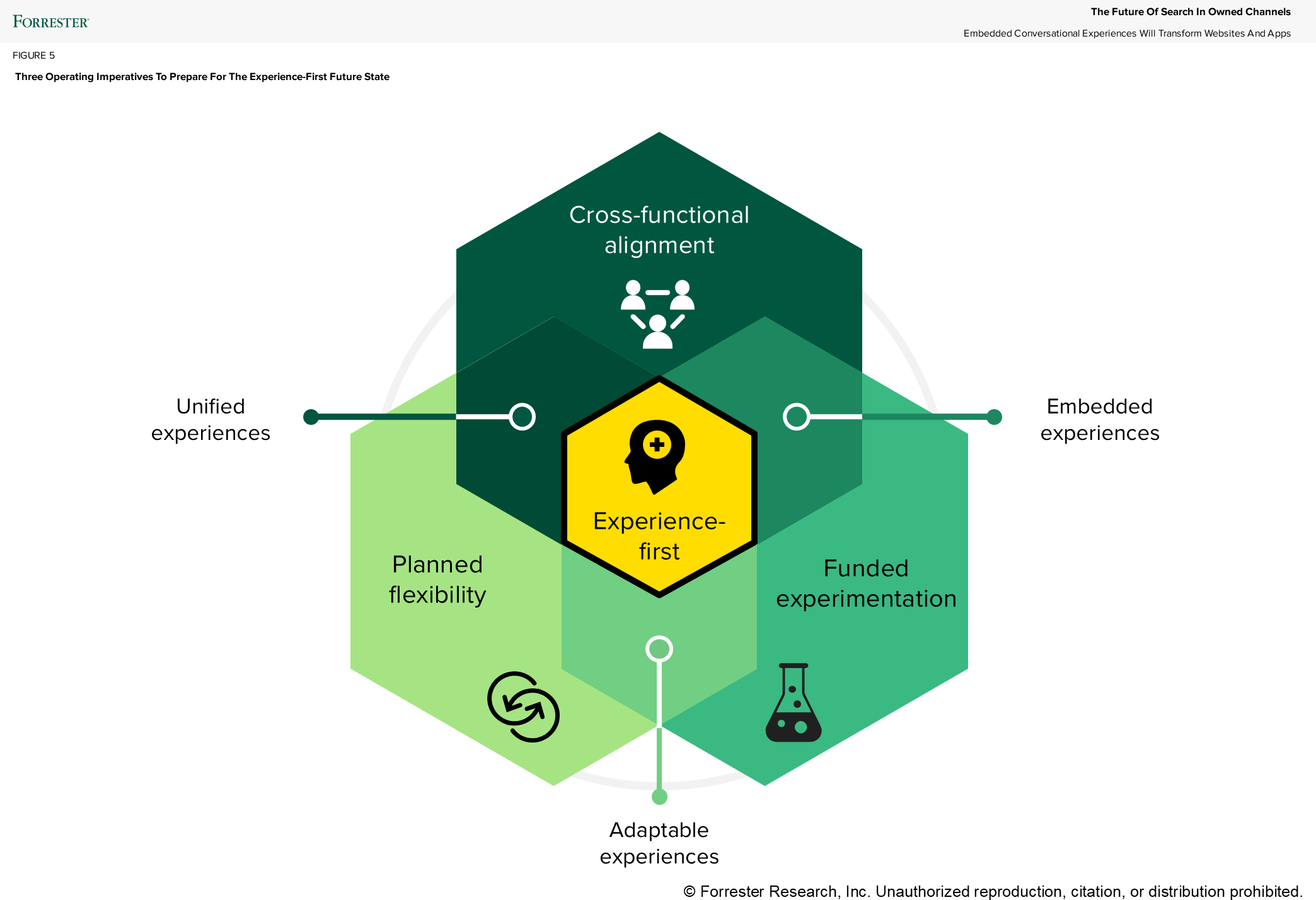
How this was written. Content Memory wrote this article with a language model from Forrester’s reporting (model: @cf/meta/llama-3.3-70b-instruct-fp8-fast); it describes that reporting rather than adding to it. The original, linked above, is the full story.
Key points from Forrester’s report
- Conversational search will transform website layouts, combining traditional search and chat.
- The shift to conversational search is not a blanket change, and traditional search will still be effective for precise queries.
- Digital leaders must adopt three new operating imperatives: cross-functional alignment, funded experimentation, and planned flexibility.
- Organizations should employ conversations only as appropriate, keeping direct retrieval fast and preserving precision matching for precise queries.
- Forrester recommends applying AI where it improves the result, and building experiences that flex between conversations and results as the context changes.
Forrester reported that conversational interfaces in answer engines and AI assistants are changing user expectations, leading to a shift in website search experiences. Users are now trained to explain their needs and refine their searches based on responses, rather than just entering keywords.
The traditional website search box will expand to include conversational interfaces, allowing for more flexible and adaptive interactions. This change will be significant, altering website layouts to a degree not seen since the top-nav layout became standard decades ago, according to Forrester.
The shift to conversational search is not a blanket change, and traditional search will still be effective for precise queries. However, conversational experiences will be necessary for lengthy questions or requests for information, and will need to flex between conversations and results as the context changes.
Conversational search will support all activities, including discovery, service, and logistics, by gathering context, interpreting requests, and explaining recommendations. It will guide product discovery, support selection decisions, and continue into service, helping customers with tasks such as assembling products or locating orders.
To prepare for this change, digital leaders must adopt three new operating imperatives: cross-functional alignment, funded experimentation, and planned flexibility. This will require aligning tech and teams, dedicating budget to experimentation, and developing a willingness to adapt to ongoing changes.
Forrester recommends that organizations employ conversations only as appropriate, keeping direct retrieval fast and preserving precision matching for precise queries. They should also apply AI where it improves the result, and build experiences that flex between conversations and results as the context changes.
The full report, The Future Of Search In Owned Channels, provides a deeper dive into Forrester's ADVICE framework and recommendations for evolving search and conversational experiences. A guidance session can also be scheduled to discuss how to prepare for the future of owned search.
Questions and answers
What is driving the change to conversational search?
The change is driven by user expectations, which are being shaped by conversational interfaces in answer engines and AI assistants, according to Forrester.
Will traditional search still be effective?
Yes, traditional search will still be effective for precise queries, but conversational experiences will be necessary for lengthy questions or requests for information.
How can organizations prepare for the change to conversational search?
Organizations can prepare by adopting the three new operating imperatives: cross-functional alignment, funded experimentation, and planned flexibility, and by employing conversations only as appropriate.

