Forrester Challenges Enterprises To Rethink AI Investments
Enterprises must look beyond productivity gains to create value with AI, according to Forrester. This shift in focus is crucial for businesses to earn a return on their AI investments.
Original reporting · forrester.com
Original: “AI ROI: Move From Minutes Saved To Value Created”
Read “AI ROI: Move From Minutes Saved To Value Created” at Forrester →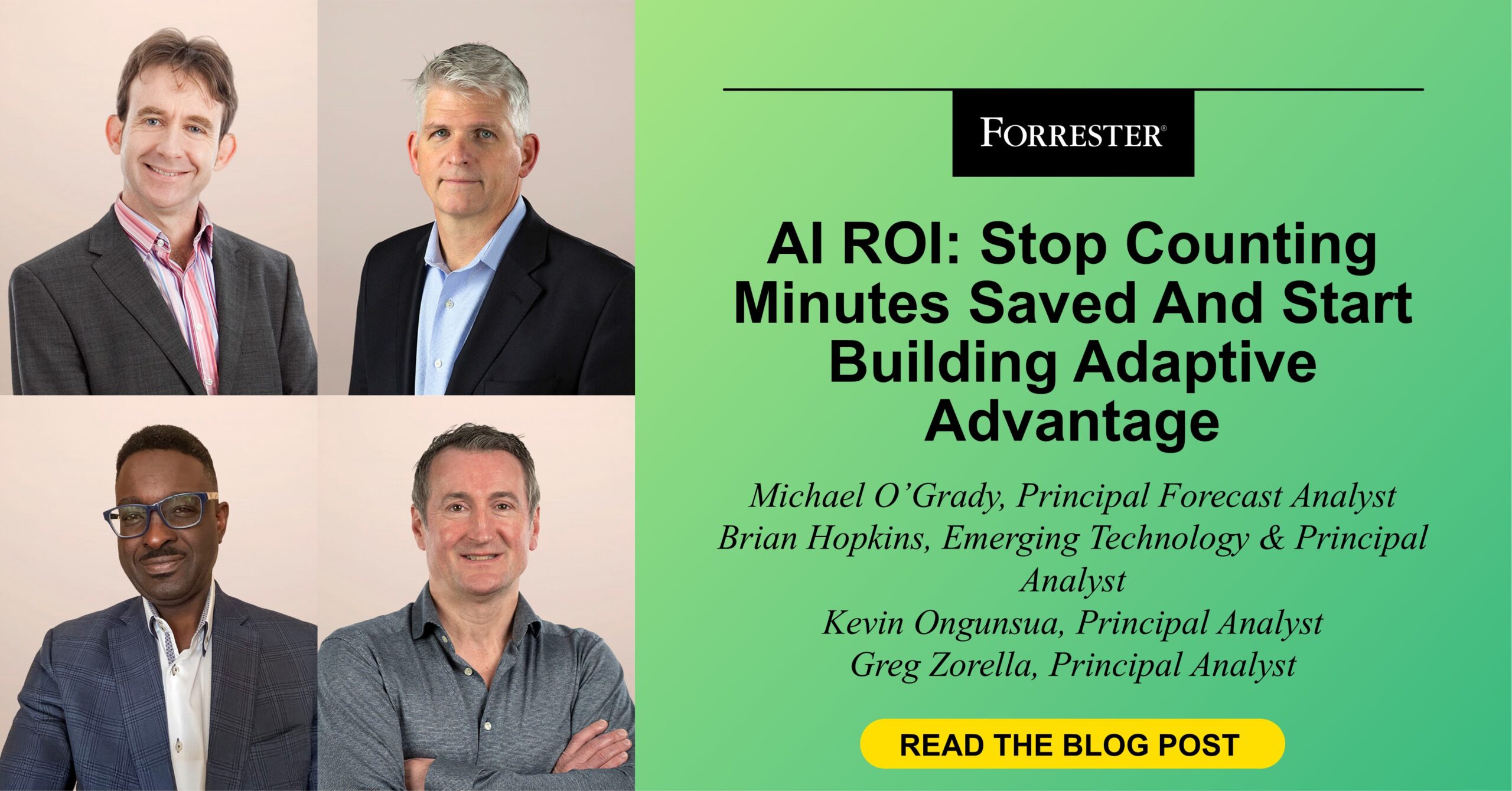
How this was written. Content Memory wrote this article with a language model from Forrester’s reporting (model: @cf/meta/llama-3.3-70b-instruct-fp8-fast); it describes that reporting rather than adding to it. The original, linked above, is the full story.
Key points from Forrester’s report
- Enterprises must look beyond productivity gains to create value with AI.
- Adoption of AI does not necessarily equate to transformation, and businesses must redesign their workflows to fully leverage the technology.
- The costs and benefits of AI adoption are complex and multifaceted, and businesses must take a nuanced approach to evaluating the technology.
- Historical technology waves have taken years to deliver sustained productivity improvements, and businesses should be cautious not to overestimate the short-term benefits of AI.
- Businesses must manage AI as a portfolio of value, rather than a collection of individual projects, and take a cross-functional approach to governance.
Forrester's recent research emphasizes the importance of moving beyond mere productivity gains when evaluating AI investments. The company argues that while AI can certainly automate tasks and increase efficiency, this alone does not guarantee a return on investment. To truly create value, businesses must consider how AI can improve decision-making, drive revenue, and enhance resilience.
A key finding of the research is that adoption of AI does not necessarily equate to transformation. Many businesses have implemented AI solutions, but few have redesigned their workflows to fully leverage the technology. As a result, the benefits of AI are often limited to individual time savings rather than broader enterprise outcomes.
The report highlights the need for leaders to rethink their approach to AI adoption, focusing on how the technology can be used to drive business value. This requires a more nuanced understanding of the costs and benefits associated with AI, including the potential for increased revenue, improved customer engagement, and enhanced organizational resilience.
Forrester's research also notes that historical technology waves have taken years to deliver sustained productivity improvements. As such, businesses should be cautious not to overestimate the short-term benefits of AI. Instead, they should focus on creating a robust business case that takes into account the full range of costs and benefits associated with AI adoption.
The company's AI Impact Returns Navigator tool is designed to help businesses navigate the complex cost-return trade-offs associated with AI adoption. By using this tool, leaders can better understand the potential returns on their AI investments and make more informed decisions about how to allocate resources.
Ultimately, Forrester argues that businesses must manage AI as a portfolio of value, rather than a collection of individual projects. This requires a cross-functional approach to governance, as well as a focus on measuring the adaptive gains that AI can bring to an organization. By taking a more strategic approach to AI adoption, businesses can unlock the full potential of the technology and create lasting value.
To achieve this, businesses should track a range of metrics that go beyond simple productivity gains. This might include measures of decision quality, experimentation, customer outcomes, resilience, and revenue growth. By taking a more holistic approach to measurement, businesses can gain a deeper understanding of the value that AI is creating and make more informed decisions about how to invest in the technology.
Questions and answers
What is the main challenge for businesses when it comes to AI adoption?
The main challenge is to look beyond mere productivity gains and focus on creating value with AI, according to Forrester.
How can businesses unlock the full potential of AI?
By taking a strategic approach to AI adoption, managing AI as a portfolio of value, and focusing on measuring adaptive gains, businesses can unlock the full potential of the technology.
What metrics should businesses track to measure the value of AI?
Businesses should track a range of metrics that go beyond simple productivity gains, including measures of decision quality, experimentation, customer outcomes, resilience, and revenue growth.